

The Lord said to Samuel, “How long will you grieve over Saul, since I have rejected him from being king over Israel? Fill your horn with oil, and go. I will send you to Jesse the Bethlehemite, for I have provided for myself a king among his sons.” (1 Samuel 16:1, ESV)
In 1 Samuel, chapter 16, Samuel responds to the Lord’s command, “I am sending you to Jesse in Bethlehem, for I have selected a king for myself from among his sons” (16:1). There, Samuel finds a young David, around the age of 15, and anoints him to be the future king of Israel. When I reflected on the account of Samuel anointing the teenager David as the future king of Israel, I found parallels that could be applied to the future of Christian Nursing. An insight was that those of us active in Christian nursing ministry could be like Samuel and be on the lookout for the future of Christian nursing, which I see as David’s. This first devotion will explore three key points to guide the Samuels. In the next devotion, we will explore how to be a David, the future of Christian nursing.
The first point is to be guided by the Holy Spirit. The Lord spoke to Samuel and specifically told him where to go and what to do. “Fill your horn with oil, and go. I will send you to Jesse the Bethlehemite, for I have provided for myself a king among his sons.” (1 Samuel 16:1, ESV). Like Samuel, we need to actively listen to the Lord. The Lord is at work in nursing, and we can hear and discover what He is doing and to whom He may lead us.
The Lord asked Samuel, “How long will you grieve over Saul…?” which brings up the next point: Get over the Past. From the Lord’s question, we can see that Samuel was having difficulty moving past King Saul, who was still king. Getting over the past is also an essential step for the future of Christian nursing. Older or more “seasoned” nurses are often stuck in their ways. This applies to nursing care, educational methodologies, and leadership skills.
Another way to get over the past was for Samuel to look to new ways the Lord would lead the Israelites. We can embrace the latest technology and tools the Lord uses or will use. How younger nurses connect or how future nurses will access scholarly publications and/or attend workshops are just a few questions to be open to new ways.
The final point is to Go. The Lord was evident to Samuel, residing in Ramah, to “go” to Bethlehem. Samuel had to leave his current place and role to venture into unknown territory and people to find the next king. For Christian nursing we may need to look for the future in new places or within different environments. This may be reaching out to new communities, clinics, or nursing schools.
As we look and pray for the future of Christian nursing, it takes an active purpose. Like Samuel, who the Lord sent, we need to be actively engaged in finding younger or less seasoned colleagues. Don’t wait for them to come to you! We need to look for Davids who are doing new and exciting things in ministry.
In the next devotion, we will explore how the Davids can be the future of nursing.
leadership

NCFI Cares: Double Portion of the Spirit
Elijah said to Elisha, “Ask what I shall do for you, before I am taken brom you.” And Elisha said, “Please let there be a double portion of your spirit on me.” (2 Kings 2:9, ESV)
At NCFI, we are looking for ways to encourage the next generation of nurses. Whether through mentoring, fellowship, or networking; the global nursing community is focused on bringing along those nurses entering the profession. As a Christian, there are many biblical examples of older or mature believers reaching out to younger or less experienced Christians. We think of Paul and Timothy (1 & 2 Timothy).
There are Moses and Joshua. I wrote a few devotions on this leadership relationship and the wonderful advice Moses gave his successor.
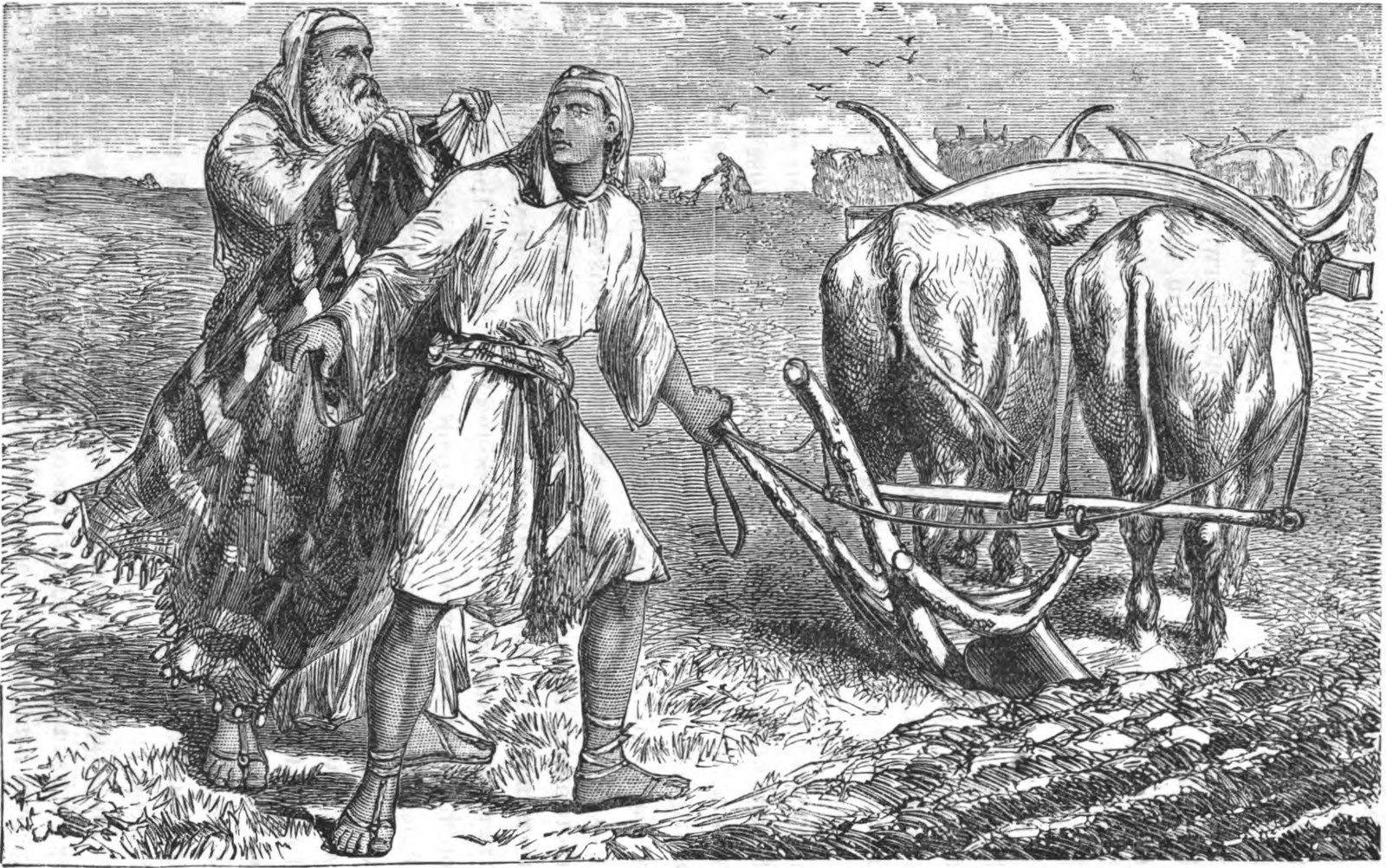
Another mentoring relationship we may not be as familiar with is Elijah and Elisha. Elijah chose Elisha as his servant (1 Kings 19:19). Elisha accompanied Elijah for six years until it was time for Elijah to go to heaven. Then the time came for Elisha to assume the role of prophet. Elisha asked for a double portion of the Spirit.
The Lord grants Elisha’s requests and we immediately read how Elisha performs greater miracles than Elijah (parting of the waters, doubling of oil, raising the dead, etc).
As we think of the next generations, Elijah’s example can provide us with great insight into how we can create a succession plan.
First, choose someone who will replace you. This may sound hard to believe, but none of us will be in ministry forever. Today is the day you begin praying for your replacement.
Second, have the person work alongside you in ministry. Not just any task, but the tasks that you are currently doing. If you organize meetings, have the person organize meetings. If you write reports, have the person write reports. You get the idea.
Third, finally, plan on giving them a double portion of what you need to perform your ministry duties. Like Elijah, we can’t dispense the Spirit to others, but we can pray for them. We can give them more than we have had for ministry, such as more training, hours, and resources. Thus ensuring they would become more successful than we were.
NCFI Cares: Joshua’s Leadership Tip #3: Get Ready for Miracles
Joshua told the people, “Ritually consecrate yourselves, for tomorrow the Lord will perform miraculous deeds among you.” (Joshua 3:5)
Before the Israelites could participate and witness God’s miracle, they needed to be consecrated to the Lord. Joshua leads them into consecration or “getting right with God” on two different occasions. The first is before they cross the Jordan River (Joshua 3) and then before they go to battle (Joshua 5).
The Israelites needed to get spiritually ready for the Lord’s work through them. Keathley, a Bible scholar, asserts that consecration includes preparation and dedication to the Lord’s purpose. In other words, God prepares us to do mighty works in Him!
Keathley includes the importance of preparation and dedication in consecration:
- Being reminded of God’s holiness – God cannot have fellowship with a sinful man or woman. (1 Peter 1:16)
- Demonstrating the necessity of the cross of Christ—without faith in the cross and the cleansing, we can’t be set apart for God’s use or blessings. (James 2:22)
- Recognizing that God doesn’t use unclean vessels—believers are saved and cleansed by the work of Christ; consecration reminds us to deal with the known or unknown sins in our lives. (Colossians 3:8-10)
- Accepting the necessity of understanding our purpose as God’s people along with the commitment to God and His purpose (2 Timothy 2:21)
- Recognizing the need for the Holy Spirit for consecrated living. (Eph 3:16; 5:18)
A New Testament example is seen in the life of Peter. Even after he denied knowing Jesus, the Lord reinstated Peter as a disciple and as a leader of the church (John 21:15-19; Matt 16:18). Jesus asked Peter three times, “Do you love me?” Peter replied, “Yes, Lord, you know I do.” Jesus then told Peter distinctly to care for the church, “Feed my sheep.” Jesus’ conversation with Peter was a form of consecration as Peter was prepared for the ministry ahead.
As we pray for God to do a miracle in our workplace, let’s open our hearts to the Holy Spirit’s sanctifying hand.
Keathley III, J. Hampton, Studies in the Life of Joshua. 3. Crossing the Jordan (Joshua 3:1-4:24) https://bible.org/seriespage/3-crossing-jordan-joshua-31-424
Catch up on Joshua’s Leadership Series and read the posts in order.
NCFI Cares: Fit To Be A Leader
Remember your leaders, those who spoke to you the word of God. Consider the outcome of their way of life, and imitate their faith. Jesus Christ is the same yesterday and today and forever.
Hebrews 13:7-8 (ESV)
We know Joshua as an amazing leader, but who was he before the book of Joshua? First, his name means “Jehovah is salvation” and when used in the New Testament, it is the same word for “Jesus” (see Hebrew 4:6). Joshua was born a slave in Egypt. He shared in all the events of the Exodus and held the place of commander of the Israelites at their great battle against the Amalekites (Exodus 17:8-16).
Joshua was Moses’ minister or servant and accompanied him part of the way when he ascended Mount Sinai to receive the two tablets (Exodus 32:17). Joshua was also one of the twelve spies sent by Moses to explore the land of Canaan (Numbers 13:16,17). Joshua and Caleb were the only men who gave an encouraging report. Commentators believe both men were 40 years old when they were sent out. Thus, Joshua was 80 years old when he was commissioned by God to be Moses’ successor.
Bible scholar Dr. McGee says the following about Joshua “He was a man of prayer, courage, dependence upon God, faith, leadership, enthusiasm, and fidelity. He is a type of Christ in name and work.”
As we begin to study the leadership style of Joshua, we can reflect on our own steadfast faith and professional calling in nursing. As Christians, we don’t rely solely upon the world’s definitions of leadership. Instead, we bring both our faith in Christ and nursing excellence to characterize our leadership.
If you are someone who says, “I can’t be a leader.” or “I am not leadership material,” then this final anonymous quote is for you.
“Joshua shows that a man of average ability may become a leader in the church. He received his call not in flaming letters across the sky, but from an old man, who knew God and knew Joshua, and saw that he was fitted by God to be a leader.” (McGee)
Let God fit you to be His leader!
Prayer: Now may the God of peace who brought again from the dead our Lord Jesus, the great shepherd of the sheep, by the blood of the eternal covenant, equip you with everything good that you may do his will, working in us that which is pleasing in his sight, through Jesus Christ, to whom be glory forever and ever. Amen. (Hebrews 13:20-21)
Briefing the Bible by Dr. J. Vernon McGee © Thru the Bible, www.ttb.org
NCFI Cares: Big Shoes of Leadership Includes a Plan for Success
This Book of the Law shall not depart from your mouth, but you shall meditate on it day and night, so that you may be careful to do according to all that is written in it; for then you will make your way prosperous, and then you will achieve success.
Joshua 1:8
As Joshua stepped into the big shoes of leadership the Lord not only provided courage to lead, He provided a plan for success:
Joshua 1:5-9Just as I have been with Moses, I will be with you; I will not desert you nor abandon
you…be careful to do according to all the Law which Moses My servant commanded you;
do not turn from it to the right or to the left, so that you may achieve success wherever
you go. This Book of the Law shall not depart from your mouth, but you shall meditate on
it day and night, so that you may be careful to do according to all that is written in it; for
then you will make your way prosperous, and then you will achieve success. Have I not
commanded you? Be strong and courageous! Do not be terrified nor dismayed, for the LORD your God is with you wherever you go.
The Lord provides us with the same plan He gave to Joshua:
- Don’t Panic — trust God with all your misgivings, doubts, fears, etc., and He will guide your steps.
- Focus on the Word–like Moses, Joshua, Billy Graham and other great Christians, our strength is found in obedience to the Word.
- You have a Partner–God is faithful and is with you always.
Whether you have a title, position, or specific calling, all nurses are leaders. Our big shoes of leadership are probably not as big as Moses’ shoes; but like Joshua you are to lead others following Christian principles.
Read: Joshua 1:1-9
Reflect: Which component of God’s plan for Joshua’s leadership is the most challenging for you?
Prayer: Holy Lord, just as You guided Joshua in filling in Big Shoes of leadership left behind by Moses, guide us in filling in Big Shoes of Leadership in our facilities, schools, and clinics. Amen.
*Previously published in CARES II: Reflections for Nurses. Available as a free pdf on the NCFI website or as a paperback book on Amazon. Learn more about the nurses devotional compilations entitled CARES Reflections for Nurses and CARES II!

NCFI Cares: Problem + Solution = Faith Lesson
In Acts 6:1-5 we read how the Hellenistic Jewish were being left out of the the daily allotment of food for their widows. So, the Jews made a complaint to the disciples about the unfairness of distribution.
“So the twelve summoned the congregation of the disciples and said, ‘It is not desirable for us to neglect the word of God in order to serve tables. Therefore, brethren, select from among you seven men of good reputation, full of the Spirit and of wisdom, whom we may put in charge of this task. But we will devote ourselves to prayer and to the ministry of the word.’ “ (verses 2-5).
The early church had experienced rapid growth after Pentecost. I imagine the disciples were pulled in every direction and working 24/7 to facilitate believer’s maturity while extending the gospel to others. A closer look at this passage reveals how the Lord used this opportunity to not only provide a solution, but to also guide and teach the early church valuable lessons relevant for us today:
- When there is conflict or complaining, instead of ignoring the problem or labeling the spokesperson as complainers listen and understand the concerns. It was only after the complaint that the disciples recognized their priority as leaders—not to “serve tables or distribute food”.
- Seek the Lord for the solution. The problem and/or the solution may be an opportunity for the Holy Spirit to emphasize an important Biblical truth in our personal and ministry life. Thankfully, the omniscience God of miracles provides a solution while guiding us in living-out His will more fully.
- Finally, no matter how busy our work in nursing becomes, ministry is sustained by the two-fold, intertwined process of the word of God and prayer. This lesson is especially relevant in nursing. We can get pulled in multiple directions and forget to take the time to pray and study God’s word.
Seek the Lord for the faith lesson found in both the problem and the solution.
 Carrie Dameron
