NCFI Cares: Pray for June 2016 Congress

It is with anticipatory excitement that I write this NCFI Cares. For in a few days the NCFI Congress will be convening in the Philippines. As I pack my bags and make final preparations for the trip, I am reminded of the beginning of CARES (Caring Across Regions with Encouraging Scriptures) that was birthed at the previous Congress in Chile, 2012. For more than 3 years, CARES has provided bimonthly devotions, prayers, and encouragement for Christian Nurses around the world. As the NCFI delegates come together with open spirits, listening ears, and soft hearts, we seek your prayers in return.

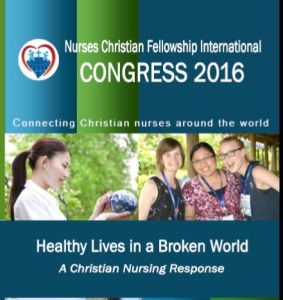
Beyond the typical prayers for safe travel, etc. pray for the attendees, leaders, organizers and presenters to learn and live out the Congress theme: Healthy Lives in a Broken World: A Christian NurseCongress 2016s Response (http://ncfi.org/conference/congress-2016/).
Pray for how the Lord will use this rich time of fellowship, prayer, and worship to build up his body of believers and purpose his plans (Acts 2:43-44). Pray for the divine fruit we will share with our patients and families, colleagues, and students.

And of course, pray that our lives and work resounds across the 6 regions: “Praise and glory, and wisdom and thanksgiving, and honor and power and strength be to our God for ever and ever. Amen!” (Revelation 7:12)

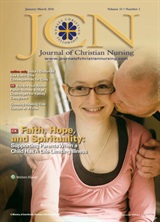
 

Christian Nursing 101: Embracing Servant Leadership

Unlike the previous article on humility where there was a limited amount of nursing articles on the topic, there was an abundance of information about servant leadership in both nursing and Christianity. Then why write one more article?

First, leadership is part of the RN role. No matter what the education, nor the job description RN’s are leaders as defined by many state practice guidelines. Second, Christians are to be leaders, specifically servant leaders. We are to exemplify Christ with our work, home, and community life. So naturally, for the Christian nurse, we are servant leaders wherever we work and whatever our job title.

Check out the article in the Journal of Christian Nursing and let me know what you think?

http://journals.lww.com/journalofchristiannursing/pages/default.aspx

NCFI Cares: R is for Rejoice

77ba6-ncficares_3bloglogo


R is for Rejoice. The definition for rejoice is to be glad, joyful, or to celebrate. Do we celebrate the works of God in nursing? When was the last time you enjoyed the perfectly timed answer to prayer? Maybe it was that much needed staff person or piece of equipment. Have you been delighted by the basic pleasures of life? An enjoyable meal with a colleague and/or a simple gift from a student or patient. What about the rewards of patient care? Listening as an older adult shares a childhood memory, laughing with a five year old’s cute story, or celebrating with a toddler who masters a new toy or activity, are enjoyable moments in nursing.

The idea of rejoicing in prayer is to remind us to recognize all the blessed moments of our work. While at the same time, take time to celebrate with our Heavenly Father who provided them. We are also reminded that celebratory prayers don’t just occur with worship and during our designated times of prayer. We can have a heart of gladness that permeates our life and spills over into multiple moments of the day.


Rejoice in the Lord, always. I say it again, rejoice. Philippians 4:4

Serve the LORD with gladness! Psalm 100:2

NCFI Cares: O is for Others

O for Others reminds us to pray for our colleagues, managers, and students regularly.  We can create a list and commit to pray for them daily or weekly. In the previous devotion, W is for Word, we discussed filling our prayers with scripture, so let’s continue with using the word with Colossians 3:12-17 (italics is the scripture):

We pray for our brothers and sisters in nursing, the elect of God, who are holy and dearly loved. We ask the Lord to clothe them with a heart of mercy, kindness, humility, gentleness, and patience. For those who work in units with conflict, anger or unkindness, that they would bear with one another and forgive one another, remembering, the Lord has forgiven each of us, so we must also forgive others. Lord, we ask for your help in keeping in mind love, which is the perfect bond and the peace of Christ. We pray for the word of Christ to dwell in each of them richly, teaching and exhorting one another with all wisdom, singing psalms, hymns, and spiritual songs, all with grace in their hearts. So that, whatever they do in word or deed, do it all in the name of the Lord Jesus. We give thanks you, God the Father through Christ Jesus.

As we live out our calling in nursing to care for our patients and families, let’s not forget our colleagues who have not come to know the mercy of God through Christ. As we honor God with our words and deeds and our love pours out, we pray for their eyes to see and their ears to hear the gospel of Christ (Matthew 13:10-14/Isaiah 6:9-10).


77ba6-ncficares_3bloglogo

Humility: A noun, an adjective and a verb?

As I looked at discussing humility as topic for Christian Nursing 101, I had to start from zero. I knew very little about humility personally and professionally and hadn’t heard the church discuss humility. In fact, it was hard to find articles and books discussing what humility is and what it is not. The problem is we may have heard a sermon, here and there, but no great in-depth discourse  nor Bible study on how to be humble. Especially when compared to topics on leadership, love, caring, courage, and others which fill the bookstores and sermon lists.

There was also very little on humility for nursing. I did run across the word used with cultural—which I loved! I was researching content for a nursing course on International Nursing, as well as content for the article “What is Caring with Dignity?” (JCN, October/December, 2015) when I I stumbled upon the term “cultural humility.”

From these deficits in our Christian faith and in nursing, as well is in my own personal/professional life, I decided a XLargeThumb.00005217-201601000-00000.CVdiscussion on humility was needed.

Check out the article in this issue of JCN
and then spend some time tin prayer and self-reflection in how to bring humility to both your personal life and your nursing practice.

Don’t be too hard on yourself. Humility, like faith is a growth process and we will spend our earthly lives gleaning attributes from our Savior. Just take note where you would like to improve and then allow the Holy Spirit to direct you accordingly.

NCFI Cares: Y is for Yield

77ba6-ncficares_3bloglogo

Y for Yield guides us in opening ourselves up to how God will speak to us through prayer. Prayer, like eating and sleeping, can become habitual and repetitive. A potential boring activity where we say the same prayers, at the same time, for the same things. We need a jolt to our prayer lives, an openness to God communicating with us in new and unique ways. Here are some Biblical examples:

Remember Moses and the burning bush—through a miraculous bush Moses heart and passion was moved to free the Israelites (Exodus 3).  Isaiah was ushered into the throne room of God. Where Isaiah heard the edict to confront the Israelites regarding their disobedience (Isaiah 6). And my favorite one, is the Lord speaking to a stubborn Balaam through his donkey (Numbers 22:28-33). Let’s not forget Peter, whose daily prayers were interrupted by a vision for the New Testament church (Acts 10).

The Lord can and will use miraculous ways to grab our attention and communicate his word. We can open to these interruptions by simple changes in our prayer routine.  Reading a new liturgy, attending a prayer service, or just sitting quietly and listening more and talking less;  these and other changes can open our hearts and spirits to a unique yielding.

Even if you are a prayer warrior and have a disciplined prayer life, jolt it out of the ordinary and yield to a new way and new passion for intercession with the Lord (Romans 8:27-29)

Blessings

“There is not only a sad and ruinous neglect of any attempt to pray, but there is an immense waste in the false praying that is done, as official praying, state praying, mere habit praying. People cleave to the form and semblance of a thing after the heart and reality have gone out of it.” (EM Bounds in The Reality of Prayer)


What is Caring With Dignity?

I was contemplating the topic of “human or humanity” and how Christians view humans in comparisons to other religions/philosophies.  I Brave new worldalways do a massive literature search for both nursing articles and Christian/theology articles and found the book “How to be a Christian in a Brave new World” by Tada and Cameron. Even though I ended up not using the book for the article, it is on my Christian Nursing book list.

I next stumbled across Transcultural Care Model while searching for cultural competency care for an International Nursing class I developed and teach. The model was wonderful and emphasized cultural humility for my community college students. Campiha-Bacota had also created a Biblically Based Model, which was perfect for the article.

I liked the emphasis on humility and providing nursing care that respected all human beings, no matter what their social, ethnic, religious, gender, etc. What I really enjoyed about finding this website/research, etc is the fact that Campiha-Bacota and others have taken a Christian worldview and applied it to nursing. I pray that more Christian nurses continue to define excellent standard for health care and nursing based upon Biblical principles.

“A biblical understanding of truth can guide nurse and other healthcare professionals in effectively caring for all our people” (Campinha-Bacote, p. 17). From Campinha-Bacote, J.,

NCFI Cares: P is for Presence

Imagine the following scenario:

While a nurse is driving to work at a busy hospital, he prays, “Lord, help me to show your love and grace,” for each staff member he will encounter. He receives report on his patients and then, prior to entering each patient’s room, he quietly asks the Lord, “Guide me in being a caring presence.”

The day continues with the nurse offering quiet, timely prayers, “Thank you Lord for your wisdom and guidance.”  A patient, who is struggling with a terminal diagnosis, is crying and feeling overwhelmed. Prior to talking with the patient, the nurse prays, “Let me truly listen to this patient and to your Spirit.” Another prayer is shared, “O Lord, you provide miracles!” in response to the patient who survived a traumatic injury with a complicated surgery.

The day comes to a close and the nurse drives home, he reflects on his day and seeks insight into the unknown mysteries, “O Lord, your ways are above my ways and my soul shall praise your name.”

The above scenario is an example of how we can bring the presence of the Lord into our daily nursing practice. As we go about the demands of our work, we can pray with our mind and spirit partnering with the Lord in the work he is doing with our patients, families, and colleagues.

1 Corinthians 14:15: “What should I do? I will pray with my spirit, but I will also pray with my mind. I will sing praises with my spirit, but I will also sing praises with my mind”77ba6-ncficares_3bloglogo

NCFI Cares: PRAYERWORKS!


As we complete our series on spiritual warfare, we will add the final piece to our nursing uniform. I hesitate to call this piece an accessory, for it alludes to something that is complimentary and can be left behind. Instead, I would say it is like our underwear (not to get too personal) something we need to wear every day. This necessary undergarment is prayer. “Prayer is the stitching that connects each piece of the armor. Prayer solidifies our righteousness found in truth, secures our salvation that rests in faith and equips us with peace and strength through the Holy Spirit” (Dameron, Stand Firm with Prayer, JCN article).

Prayer is not only required for spiritual warfare and faith, prayer is also essential for nursing. Through prayer we bathe our self, our nursing practice, and our workplace with grace and truth found in scripture.

In the coming months, we will discover 11 ways to bring prayer into nursing. Using the acrostic PRAYERWORKS as a guide, each devotion will build prayer into our nursing care. The hope is that instead of only looking for ways to pray with patients, we will find infuse our life and work with the pulsating presence of Christ through prayer.

“Failure has resulted from a lack of trust and a weakness of faith—and both caused by a neglect of prayer” (EM Bounds, The Necessity of Prayer).

EMbounds prayer

p.s. To get a sneak peak into PRAYERWORKS, check out http://wp.me/p4IKhl-6H

Christian Nursing 101: Spiritual Gifts In Nursing

Many of us are familiar with spiritual gifts and their use within the church or body of believers, but have you ever thought about those same gifts being used in nursing? This is what the brief article in Journal of Christian Nursing entitled Spiritual Gifts in Nursing is about. Our spiritual gifts are unique ways the Lord has gifted us as individuals and as a body to enrich the community, national and global church.

The article “Investing in the Divine Economy” by Hardy reminds us to look at our career or vocation as an extension of our talents and gifts found through Christ. As Christian nurses we can impact nursing in immeasurable ways by merging our nursing knowledge with our spiritual gifts and talents.

I would encourage new nurses and/or those nurses in career transition to spend time seeking the Lord in what he would have you do with your gifts and talents. As our Creator he has uniquely designed you and knows the plans he has for you (Psalm 139). Spend time with Jesus, in his word and discover the real YOU.

Here is a helpful linkCR: Vocation Issue:

Baylor University prints “Christian Reflection Project” with FREE in-depth discussion on various topics. The link takes you to the issue on VOCATION.