- View the Video that is uploaded into YouTube: Big Shoes of Leadership
OR
- View the pictures of my Powerpoint Presentation w/ my notes

OR
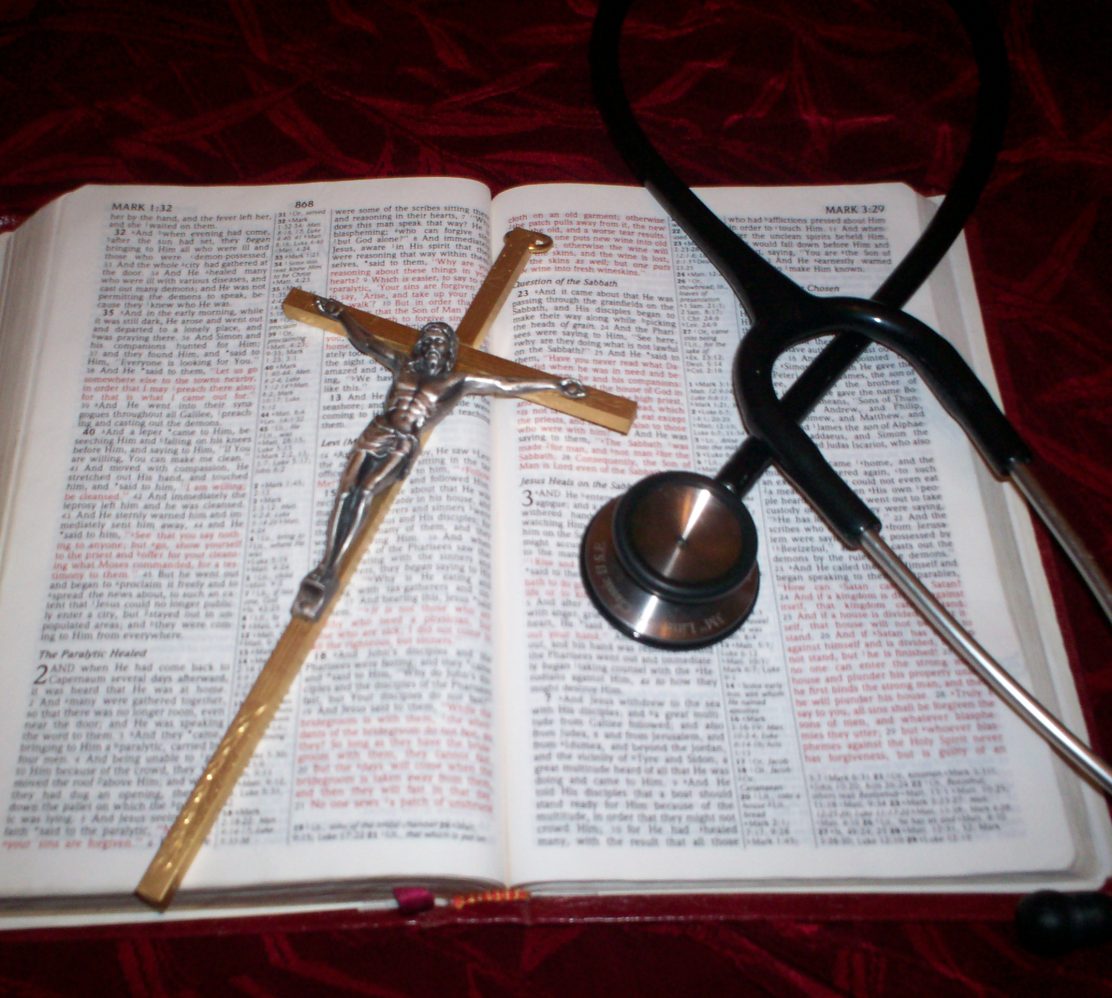
What does faith in nursing have to do with the Nicene Creed? I say “a lot!” To better explain myself, I need to share with you my history with the Nicene Creed. If you have read a previous blog posting on January 2013, you will see that Tove Giske asked me to contribute four Christian nursing articles for the Journal of Faith and Profession a journal published in Norway, 2012. While I was praying and thinking about the series of articles, I thought of the 4 essential concepts to Christian nursing: Faith, Compassion, Prayer and Excellence. These topics became the 4 articles with accompanying Bible studies. After their publication, I compiled the 4 together with international edits, etc to create Our Faithful Journey in Nursing: A Teaching on Faith, Compassion, Prayer, and Excellence in Nursing (available as an eReader through Amazon).
It was while I was researching and writing the article on Faith, that I came across the Nicene Creed. My home church and denomination does not use any creed or written prayer as part of the liturgical service. I experienced the congregation reciting the creed as a statement of faith when I attended other Christian services, like Catholic, etc.
Also, during this time around 2011-2012, I was researching and learning about the postmodern philosophy and culture exploding in the USA and other western societies. In a nut shell, postmodern philosophy denies absolutes, objectivity, and dogmatism to one of relativism, subjectivism, and tolerance. For Christians, who hold to a faith defined by Truth (big T–God) and obedience to rules, postmodern philosophy is in sharp contrast to our faith.
I have also been a student of world religions. I came from a Mormon back ground, explored various religions and philosophies during my ‘seeking’ years, as well as live and work in a melting pot of cultures, religions, and philosophies. All this to say, I seek to understand other people and their beliefs, as well as stay aware of how a simple interpretation of words in the Bible can be the basis for different religions and sects.
Okay… I admit I am getting long winded here, but the point is when you learn how various religions say who Jesus is and how that is different then Christianity, you become a life long student of the Nicene Creed. For example, Islam views Jesus as a prophet, etc.See World Religion Chart for more information.
The Nicene Creed was written during a time (325 AD) when there was much dispute between the scholars and theologians about the Truth of Christianity. Who is God? Christ? Holy Spirit? What is salvation? and other BIG questions. Also, remember this was before the Bible or Scripture was available to everyone. The typical Christian went to church and memorized scripture, prayers, creeds, etc as a way to live their life and teach their family.
Okay…here is the point…The Nicene Creed is the basis of our Christian Faith and is a spiritual questionnaire of what each one of us truly believe. Here is the best online version I have found with scriptures supporting each statement Nicene Creed w/ Scripture .
So what does the Nicene Creed have to do with Faith in Nursing? Everything! stay tuned
We may readily admit that there is a “bias” or “negative attitude” towards older adults in our health care systems. This can be seen in assuming that a 90 year old should not have an organ transplant to putting adult diapers (depends) on a 70 year old. What may surprise you, is that ageism is in the Christian church! One such example is the divide over types of worship music during Sunday service. One church’s solution was to have separate rooms for the worship–one room was the traditional hymns, while the other main service had the “christian rock” style of worship. I am sure it wasn’t intended, but the segregation of music brought ageism front and center to the body of Christ. There are and always will be the challenges of reaching the next generation for Christ, while embracing the wisdom and experience of our older brothers and sisters.
An important part of this balance is for nurses, who represent Christ to our profession and to the older adults in our church communities. Scripture is filled with examples of honor, respect, and dignity for seniors in the Kingdom.
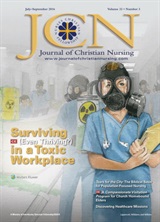
Read the article in Journal of Christian Nursing and explore the various references used as citations. We will not only avoid ageism, but we then can encourage and educate our fellow colleagues and parishioners in caring for senior saints across their entire lifespan!
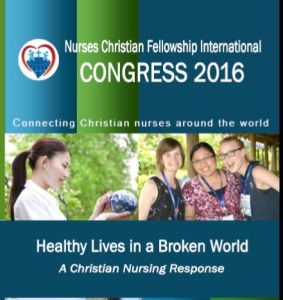
It is with anticipatory excitement that I write this NCFI Cares. For in a few days the NCFI Congress will be convening in the Philippines. As I pack my bags and make final preparations for the trip, I am reminded of the beginning of CARES (Caring Across Regions with Encouraging Scriptures) that was birthed at the previous Congress in Chile, 2012. For more than 3 years, CARES has provided bimonthly devotions, prayers, and encouragement for Christian Nurses around the world. As the NCFI delegates come together with open spirits, listening ears, and soft hearts, we seek your prayers in return.
Beyond the typical prayers for safe travel, etc. pray for the attendees, leaders, organizers and presenters to learn and live out the Congress theme: Healthy Lives in a Broken World: A Christian Nurse
s Response (http://ncfi.org/conference/congress-2016/).
Pray for how the Lord will use this rich time of fellowship, prayer, and worship to build up his body of believers and purpose his plans (Acts 2:43-44). Pray for the divine fruit we will share with our patients and families, colleagues, and students.
And of course, pray that our lives and work resounds across the 6 regions: “Praise and glory, and wisdom and thanksgiving, and honor and power and strength be to our God for ever and ever. Amen!” (Revelation 7:12)
Hands
Guided by two strong arms they collaborate together, yet work independently. Each hand contains 4 bones for each finger and 3 bones for the thumb. Along with bones in the palm and the intrinsic bones of wrist we have 29 bones in each hand. A mesh of tendons and muscles provide dexterity for the multiple functions of gripping, fanning, and arching. Tough for manual work, yet sensitive to interpret dots on a line for reading braille. Gentle to caress and touch, yet quick and responsive for pianists and guitarists. The ridges on the fingertips have unique signature loops and curves that create individual prints precise to each human. A hand can create a fist for fighting, hold a cup for drinking and gently cradle an infant’s head. Hands can be raised in worship, clasped in prayer and extended to one in unity and collaboration. (Psalm 134:2, 143:6).
As nurses we frequently wash our hands to prevent infections, hold patient hands for comfort and strength, and bring many hands together to share our workload. We have wiped tears, cleansed wounds, applied ointments, and assessed temperature. With the increasing complexity of computers and devices, we use our hands to program pumps, manage devices, document medical care and connect with colleagues through cell phones and computers.
Praise God for his wonderful, creatively designed hands. Thank him for the blessing to have hands that can fulfill many functions for we know of people around the world who lose hand(s) and/or the many functions of their hand(s) due to congenital, trauma, illness, or disease. Take a moment to care for your hands…they work hard and are an important nursing tool!

Using the PRAYERWORKS acrostic we have explored simple ways to enrich our practice and our profession through prayer, as well as a reminders to pray for and with our colleagues. For this devotion we use the final S to remind us to approach praying with our patients with Skill. Originally when I created the acrostic, I used the word Sensitivity, which is important. At the same time, the more I teach, share and discuss spiritual care, I believe Skill is a better term and encompasses sensitivity.
Myself and other nurses on the teaching team for The Art and Science of Spiritual Care through NCFI include the many steps of implementing prayer as part of our nursing care: a complete assessment that includes whether or not our patient’s use prayer as part of their spiritual life; a discussion/teaching on intercessory prayer; exploring the nurse’s comfort with praying various Christian prayers; and then practice praying with a peer using our simple model. As you can see these many steps require skill and sensitivity to explore prior to praying with a patient.
We can rest assured that Jesus, our High Priest intercedes for our patients and that the great Advocate assists our patients in praying (Hebrews 7:25, Romans 8:26). There are times when prayer is the best nursing action. When it is isn’t, we can reach out with kindness, caring, humility and grace to be the hands and heart of our Lord (Colossians 3:12).
Explore all the devotions in PRAYERWORKS
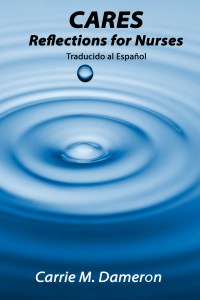
If you enjoy reading the NCFI Cares bi-monthly devotions, then you are in for a surprise–CARES:Reflections for Nurses. Each reflection integrates the poignancy of a nurses’ devotion with reflective questions and readings in a brief one-page format. Thus, each reflection
includes devotion/discussion with suggestion reading, responsory question, and prayer.

The 52 reflections are a combination of previous devotions which have been revised and updated, along with unpublished Christian nursing topics.
Whether you want to uplift your personal faith journey, exemplify your Christ-like professional nursing, or bring the mercy of God to your patients, families, colleagues, and students, CARES: Reflections for Nurses contributes to your faith development. The reflections can also be used with a mentor/mentee relationship and/or facilitate a nurses fellowship group.
Did you notice the “sub title” Traducido al Español? CARES: Reflections for Nurses has a unique feature. It is bilingual! Meaning–it has both English and Spanish in the same book! So share it with your colleagues, who reside in Latin America and/or have Spanish as their primary language!
Stay informed throughout the publication process by sending me an email at carrie@carriedameron.com
Printed copies will be available at the NCFI Congress in the Philippines, June 2016.
Hope to see you there.
May Update:
CARES is available NOW for order–either as a printed book or an ebook on Kindle on Amazon
![]()
K is for Kingdom
Jesus’ final prayer with his disciples included all Christian’s throughout the ages. He says, “I am not praying only on their behalf, but also on behalf of those who believe in me…” (John 17:20). These eternal words remind us that we are part of the larger body of believers. We are not just individual Christians who attend a church, belong to a denomination, nor connect through an international ministry, like NCFI. Instead all Christians throughout time are connected through Christ for the purpose of building the Kingdom. Verse 21 & 23 of John 17, says “I pray that they will be in us, so that the world will believe that you sent me.” In other words, the world looks to the unity of Christianity as a testimony of God’s purpose in sending Christ. This gives me pause for thought. For the unity of Christianity is not very cohesive. Thus, I agree with E.M. Bounds response to Jesus prayer in John 17 and wrote the following edict:
Pray for God’s people, for their unity, sanctification, and glorification. How the subject of their unity pressed upon Jesus! Today’s walls of separation,
alienations, riven circles of God’s family, warring tribes of ecclesiastics—how He is torn, bleeds, and suffers anew at the sight of these divisions! Unity—that is the great burden of that remarkable high priestly prayer. “That they may be one, even as we are one.” The spiritual oneness of God’s people –that is the heritage of God’s glory to them, transmitted by Christ to the Church.”
May the Lord open our hearts to pray for unification of the Holy Spirit throughout the global Christian Church and open our hands to extend across denominations to demonstrate the redemptive work of Christ.
(EM Bounds in The Reality of Prayer, p. 305)

If you have enjoyed stopping by and reading NCFI Cares, then you are in for a pleasant surprise–a compilation is in the works entitled CARES: Reflections for Nurses!
I began sending out the bi-monthly NCFI Cares devotions for Nurses Christian Fellowship International (NCFI) in January, 2013. I am amazed it has been 3 years! In 2014, NCFI leadership asked me about providing a printed compilation. I was excited for the opportunity and set out on a new writing journey with a few goals in mind.
First, I wanted the compilation to be a combination of old and new content.Thus, out of the 52 reflections contained in CARES, 26 will be brand new, Christian nursing topics.
Second, I wanted something more than just devotions and not as comprehensive as a Bible study, so I penned reflections. Each reflective topic contains a devotion, selected reading(s), poignant question(s), and a prayer. Turning a simple, daily exercise into a meaningful process for faith and professional development.
Finally, I wanted each devotion to be translated into Spanish. Since the beginning of NCFI Cares, my sister in Christ and nursing, Martha from Argentina, has translated each devotion prior to sending it to Latin America nurses! Thus, CARES is bilingual.
I am excited to bring CARES: Reflections for Nurses!
Check back, as I continue to share updates!
Carrie