
NCFI Cares: Y is for Yield

77ba6-ncficares_3bloglogo

Y for Yield guides us in opening ourselves up to how God will speak to us through prayer. Prayer, like eating and sleeping, can become habitual and repetitive. A potential boring activity where we say the same prayers, at the same time, for the same things. We need a jolt to our prayer lives, an openness to God communicating with us in new and unique ways. Here are some Biblical examples:

Remember Moses and the burning bush—through a miraculous bush Moses heart and passion was moved to free the Israelites (Exodus 3).  Isaiah was ushered into the throne room of God. Where Isaiah heard the edict to confront the Israelites regarding their disobedience (Isaiah 6). And my favorite one, is the Lord speaking to a stubborn Balaam through his donkey (Numbers 22:28-33). Let’s not forget Peter, whose daily prayers were interrupted by a vision for the New Testament church (Acts 10).

The Lord can and will use miraculous ways to grab our attention and communicate his word. We can open to these interruptions by simple changes in our prayer routine.  Reading a new liturgy, attending a prayer service, or just sitting quietly and listening more and talking less;  these and other changes can open our hearts and spirits to a unique yielding.

Even if you are a prayer warrior and have a disciplined prayer life, jolt it out of the ordinary and yield to a new way and new passion for intercession with the Lord (Romans 8:27-29)

Blessings

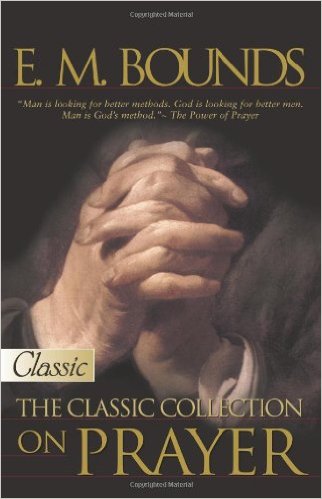
“There is not only a sad and ruinous neglect of any attempt to pray, but there is an immense waste in the false praying that is done, as official praying, state praying, mere habit praying. People cleave to the form and semblance of a thing after the heart and reality have gone out of it.” (EM Bounds in The Reality of Prayer)


 

NCFI Cares: A is for Alert

fbbca-ncficares_3bloglogo

A for Alert reminds us to be alert to opportunities to pray with our colleagues. Many times our compassion and concern is focused on our patients and the holy interventions they need. We can also be alert to our colleagues, managers, and administrators. Whether it is a colleague worried about their marriage or stressed about their children. Or maybe it is a manager/administrator facing a newly diagnosed illness or disease. We can listen and support their tough life journey through compassionate prayer.

Alert also reminds us not to forget to stop immediately and pray with them. Personally, I get busy listening, consoling, and supporting that I forget to stop and ask them if I can pray with them. If the situation or work environment is not conducive to an immediate, quick prayer. Then, be sure to follow up with a text, email, or quick word letting them know you are praying for them and would welcome a moment to pray WITH them.


As we seek to be alert to the needs of our colleagues, let’s respond compassionately with prayer:

“There is a certain compassion that belongs to the natural person, which expends its force in simple gifts to those in need, and is not to be despised. But spiritual compassion, the kind born in a renewed heart, is Christlike in its nature, deeper, broader, and more prayer-like. Christlike compassion always moves to prayer.” (E.M.Bounds in The Essentials of Prayer)

Ephesians 6:18 With every prayer and petition, pray at all times in the Spirit, and to this end be alert, with all perseverance and requests for all the saints.

What is Caring With Dignity?

I was contemplating the topic of “human or humanity” and how Christians view humans in comparisons to other religions/philosophies.  I Brave new worldalways do a massive literature search for both nursing articles and Christian/theology articles and found the book “How to be a Christian in a Brave new World” by Tada and Cameron. Even though I ended up not using the book for the article, it is on my Christian Nursing book list.

I next stumbled across Transcultural Care Model while searching for cultural competency care for an International Nursing class I developed and teach. The model was wonderful and emphasized cultural humility for my community college students. Campiha-Bacota had also created a Biblically Based Model, which was perfect for the article.

I liked the emphasis on humility and providing nursing care that respected all human beings, no matter what their social, ethnic, religious, gender, etc. What I really enjoyed about finding this website/research, etc is the fact that Campiha-Bacota and others have taken a Christian worldview and applied it to nursing. I pray that more Christian nurses continue to define excellent standard for health care and nursing based upon Biblical principles.

“A biblical understanding of truth can guide nurse and other healthcare professionals in effectively caring for all our people” (Campinha-Bacote, p. 17). From Campinha-Bacote, J.,

NCFI Cares: R is for Request

77ba6-ncficares_3bloglogo

How many times to do we seek God’s specific insight into a situation BEFORE we pray for a solution? Most of the time we pray for the solution—healing, relationship, peace, and/or hope. R for Request prompts us seek God’s wisdom and heart before we pray for our colleagues, patients and students.

Isaiah 55:9 says, “Just as the sky is higher than the earth, so my deeds are superior to your deeds and my plans superior to your plans.” In other words, God has a plan for every situation that is probably better than our own plan. Whether it is a complicated patient or challenging work environment, God is already at work. This doesn’t mean we just pray “God’s will” for everything. Instead, we embrace Romans 8:26-27:

The same way, the Spirit helps us in our weakness, for we do not know how we should pray, but the Spirit himself intercedes for us with inexpressible groanings. And he who searches our hearts knows the mind of the Spirit, because the Spirit intercedes on behalf of the saints according to God’s will.

Whether you are praying for a patient, colleague, or your leadership team, request the Lord’s Spirit to guide your prayerful heart. He will open our heart and eyes to the situation and filling our spirit with his wisdom. Then our prayers can be in conjunction with the Lord’s perfect plan.


“Praying men and women have been God’s representatives on earthy, but prayerless men and women have never been used by Him.” E M Bounds in The Necessity of Prayer

NCFI Cares: P is for Presence

Imagine the following scenario:

While a nurse is driving to work at a busy hospital, he prays, “Lord, help me to show your love and grace,” for each staff member he will encounter. He receives report on his patients and then, prior to entering each patient’s room, he quietly asks the Lord, “Guide me in being a caring presence.”

The day continues with the nurse offering quiet, timely prayers, “Thank you Lord for your wisdom and guidance.”  A patient, who is struggling with a terminal diagnosis, is crying and feeling overwhelmed. Prior to talking with the patient, the nurse prays, “Let me truly listen to this patient and to your Spirit.” Another prayer is shared, “O Lord, you provide miracles!” in response to the patient who survived a traumatic injury with a complicated surgery.

The day comes to a close and the nurse drives home, he reflects on his day and seeks insight into the unknown mysteries, “O Lord, your ways are above my ways and my soul shall praise your name.”

The above scenario is an example of how we can bring the presence of the Lord into our daily nursing practice. As we go about the demands of our work, we can pray with our mind and spirit partnering with the Lord in the work he is doing with our patients, families, and colleagues.

1 Corinthians 14:15: “What should I do? I will pray with my spirit, but I will also pray with my mind. I will sing praises with my spirit, but I will also sing praises with my mind”77ba6-ncficares_3bloglogo

NCFI Cares: PRAYERWORKS!


As we complete our series on spiritual warfare, we will add the final piece to our nursing uniform. I hesitate to call this piece an accessory, for it alludes to something that is complimentary and can be left behind. Instead, I would say it is like our underwear (not to get too personal) something we need to wear every day. This necessary undergarment is prayer. “Prayer is the stitching that connects each piece of the armor. Prayer solidifies our righteousness found in truth, secures our salvation that rests in faith and equips us with peace and strength through the Holy Spirit” (Dameron, Stand Firm with Prayer, JCN article).

Prayer is not only required for spiritual warfare and faith, prayer is also essential for nursing. Through prayer we bathe our self, our nursing practice, and our workplace with grace and truth found in scripture.

In the coming months, we will discover 11 ways to bring prayer into nursing. Using the acrostic PRAYERWORKS as a guide, each devotion will build prayer into our nursing care. The hope is that instead of only looking for ways to pray with patients, we will find infuse our life and work with the pulsating presence of Christ through prayer.

“Failure has resulted from a lack of trust and a weakness of faith—and both caused by a neglect of prayer” (EM Bounds, The Necessity of Prayer).

EMbounds prayer

p.s. To get a sneak peak into PRAYERWORKS, check out http://wp.me/p4IKhl-6H

NCFI Cares: Power Up!

As we stand firm in truth, righteousness, and peace we need a protective shield to guard our spirit from the flaming arrows of Satan. Thankfully we have a shield of faith. This is not the strength of our belief or faith as a defense weapon. Nor does it come from our ability to believe it works. Instead it is based on fidelity, “the character of the one who can be relied upon.” Thus, our shield of faith comes from the attributes or character of Christ. Jesus is all powerful, all knowing and demonstrates sovereignty over heaven and earth throughout all of time (Revelation 5:12-13; 22:13).

Outfitted with our nursing uniform for spiritual warfare, we might imagine ourselves as a children’s fictional superhero. Who, when confronted by an evil villain, transforms into a supercharged warrior. Our essential garment includes a helmet to protect our thoughts and we stand secured in the righteousness of our Redeemer. We expertly yield our sword while protecting our self with a shield of faith. We are fastened by truth found in Christ while attuned to where our peaceful sandals leads us (Ephesians 6:13-17)

Next time, we see flaming arrows of Satan locked onto our spirit. We can “power up” our nursing uniform fortified in the power of our Mighty Warrior.


Prayer: Our Lord is faithful to strengthen you and protect you from the evil one while directing your hearts toward his love and the endurance of Christ, amen. (1 Thessalonians 3:3-5)77ba6-ncficares_3bloglogo

NCFI Cares: Sword Training 101

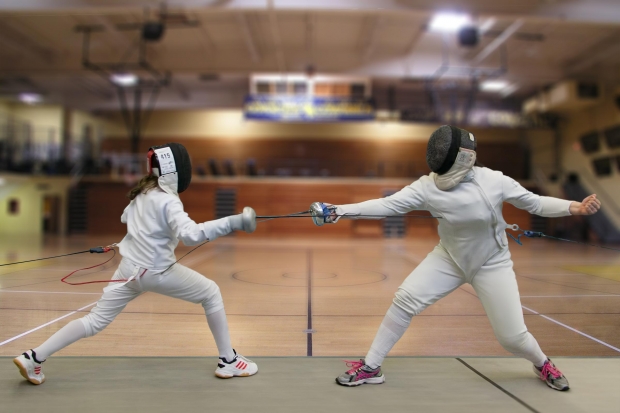
Fencing

There is intrinsic skill and strength required for sword fighting or fencing. Each person must have knowledge on how to use a sword. Learning the technique of sword fighting also takes practice. A participant can’t just read a book. Instead, they spend time in a safe environment practicing their new skills. These same concepts can be applied in using the sword of the Spirit, i.e., word of God to combat the enemy (Ephesians 6:17). Just like the sport or art of swordsmanship, using the word of God as a weapon takes knowledge, skill, and training.

Our sword training begins with an in-depth knowledge of scripture. Our education includes historical context and theological meaning, as well as appropriate application of God’s word to our lives. We also need godly wisdom in how to use scripture with each skirmish we encounter. Like a warrior yielding a sword, we need to discern the consequences of each strike.  For example, at certain times a quiet resolve within our heart is the best way to combat evil. While, at other times the strike of our sword is issued verbally. Like the art of sword fighting, these are carefully planned out strikes to halt or disarm the enemy, with minimal collateral damage.

As with any weapon, it takes knowledge, skill and discernment to appropriately use the sword of Spirit. And neither sword should be yielded inappropriately or used haphazardly.

Blessings, Carrie

Prayer: Our Lord is faithful to strengthen you and protect you from the evil one while directing your hearts toward his love and the endurance of Christ, amen. (1 Thessalonians 3:3-5)

77ba6-ncficares_3bloglogo

NCFI CARES: D’s and T’s of Spiritual Warfare

Just like a helmet can protect the vital structures of our brain. The helmet of salvation protects our mind from the enemy and various destructive thoughts (Ephesians 6:17; James 1:15). We can be deceived by confusing the truth with lies. At times, we can lack insight or be devoid of the enemy devices. We can doubt the words and teachings of Jesus Christ. As well as, distrust the work of the Holy Spirit in our lives and ministry. Through uncontrolled desires, our thoughts can delve us into distractions, diversions and wayward detours. When disappointments tag along, we can get stuck in despair and distress. The Devil delights when devout Christians develop divisive, disruptive, and detrimental disobedience that defies the Divine.

Let’s discontinue the work of the Devil (and all those “D’s”) and secure our mind with some thoughtful “T’s” (Philippians 4:8). Trust the truth of God’s word and Christ’ training found in both testaments. Throw off temptation and terminate transgressions. Take time to be thankful and extol our Lord. With a transparent heart entreat Christ for protection and strength. Think, retain and teach the tried-and-true texts that leads to virtuous thoughts. Strive for togetherness as a team while being thoughtful and attentive to all. Christians can tear apart the tormentor’s enticements through the truth of the Word and the tenacity of their testimony.


Prayer: Our Lord is faithful to strengthen you and protect you from the evil one while directing your hearts toward his love and the endurance of Christ, amen. (1 Thessalonians 3:3-5)

77ba6-ncficares_3bloglogo

NCFI Cares: Sandals for Chicken Little

7e133-ncficares_3bloglogo

We have fastened our belt and attached our breastplate of righteousness, now we are ready to secure the gospel of peace to our feet (Ephesians 6:15). These unique shoes or sandals are strong, sturdy and fortified with the message of Christ (Matthew 10:5-13).  Jesus did not come to judge, nor cause war or conflict (John 12:47). Instead, he brought healing, peace and forgiveness. This is the peaceful message we fasten to our feet (Acts 10:36).

One way we change shoes, is by not allowing our minds and hearts to be absorbed by stress, anxiety, or fear. All of these emotions and responses come from a spirit of fear and not the Holy Spirit (2 Timothy 1:7). These are also emotions and thoughts that Satan capitalizes on.

I am reminded of a children’s story/folk tale entitled Chicken Little. It is about a chicken, who after having something fall on her head, runs in a panic yelling, “The sky is falling!” She runs to all her animal friends, Henny Penny, Turkey Lurkey, Goosey Loosey and others. Together they go to warn the King. Depending on the version, the animals either hide in a cave never warning the King; or they are able to warn the King, who explains to Chicken Little and her friends about the large acorns falling from the trees.

Obviously, Chicken Little and her friends forgot their peaceful sandals and the promises of Christ (Philippians 4:7). 🙂

Prayer: Our Lord is faithful to strengthen you and protect you from the evil one while directing your hearts toward his love and the endurance of Christ, amen. (1 Thessalonians 3:3-5)

Blessings

Carrie

Learn more about Chicken Little @https://en.wikipedia.org/wiki/Henny_Penny

Carrie

Learn more about Chicken Little @https://en.wikipedia.org/wiki/Henny_Penny